The Three Factors that Separate Success from Failure…
and how to get started today

The difference between who you are today and who you will be by the end of this year will rest on three factors:
☰ the goals you choose,
☰ the people you spend time with, and
☰ the habits you practise.
Put simply: purpose, people, performance.
Over three decades of leadership and observation, I keep returning to the same pattern.
Those who flourish over time do three things consistently:
They set clear goals anchored in a compelling purpose.
They choose peers who lift, stretch, and hold them to account.
They build small, repeatable habits that compound into performance.
It is deceptively simple, but it has stood the test of time.
Our goals – Purpose
“You don’t have to be a fantastic hero to do certain things—to compete. You can be just an ordinary chap, sufficiently motivated to reach challenging goals.” — Edmund Hillary
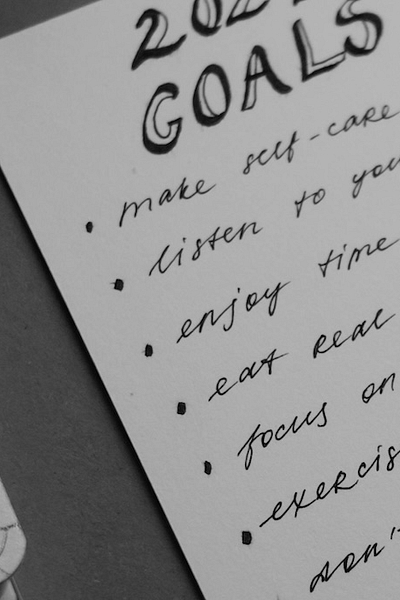
When you look at enduringly successful individuals, you almost always find a clear sense of purpose expressed as specific, written goals - visible and revisited weekly, sometimes daily.
Two patterns stand out:
Purpose precedes performance. A clear why gives coherence to countless daily decisions.
Written goals change behaviour. Once something is on paper, it starts to shape your calendar - your time, focus and energy.
Years ago, I met a young athlete of unremarkable natural talent and a middling career. In our first conversation, he produced a set of written goals: not just sporting ambitions, but family, post-playing career, and finances. Many had timelines; several were broken into smaller milestones.
Over the next two decades, I watched the quiet power of that discipline. He completed multiple tertiary qualifications, built a strong family life, established profitable ventures after sport, led his team in scoring, captained his club, and ultimately represented his country at the Olympics.
The talent was not extraordinary. The clarity and commitment were.
This story is not an outlier.
One client began as part-time worker in a fast-food chain - a return-to-work mum with family commitments. She started with a simple vision board. Today she is among the leading real estate agents in her city, consistently ranked in the top five year-in, year-out.
The common denominator is not luck but written goals, visualised daily, anchored in a compelling purpose.
Our peers – People
“You can’t soar with eagles if you scratch with turkeys.”
Over time, we average out the people we spend time with.
Our speech, attitudes, expectations, and even our sense of what is “normal” represents our peer group.
You can see this in small ways. Notice how your voice changes when speaking with someone whose first language is different, or when talking to a baby: your pitch, pace, and tone adapt almost automatically.
The same mirroring happens with behaviours and aspirations.
We recognise this instinctively with teenagers.
If your son’s friends spend most of their time playing video games and smoking weed, he’s unlikely to be a doctor or lawyer.
If your daughter’s circle is preoccupied with looks, shopping centres, boys, and Instagram, she will drift that way too.
This is not just an adolescent phenomenon - adults do it too.
In a recent seminar, a participant challenged this idea. Instead of arguing, we asked a series of questions.
Is your income roughly the average of your close social group?
What about your house, car, holidays, and lifestyle?
Reluctantly, the participant acknowledged that, yes, almost everything sat within a band defined by their friends.
When one person in a peer group adopts very different goals and behaviours, it creates dissonance. That tension is resolved in only two ways: the person either reverts to the group’s norms or changes their peers.
The same dynamic plays out in close relationships. When a husband or wife decides to lose significant weight, pursue a demanding new career, or immerse themselves in a consuming new pursuit, the relationship is tested. Eventually, they either realign or drift apart.
The uncomfortable truth is this: over time, our lives and lifestyles tend to be average of the people around us.
Our habits – Performance
“If you’re not moving forward, it doesn’t matter which direction you face.”
Intentions are plentiful. Action is scarce. It is not enough to have a clear purpose and the right people around us if we remain stationary.
Results require disciplined effort.
There is always a price to pay up front, in proportion to the outcomes we seek.
Our lives are the sum of our repeated behaviours—good, bad, and indifferent. The question is not whether we have habits, but whether they align with our aspirations.
This demands vigilance about how we spend our time, focus, and energy.
The two most powerful question to ask oneself daily are:
What habits should I start or shape?
What habits should I stop or substitute?
It’s simple yet powerful. Change your habits and, over time, you change your life.
The key is to start small and build streaks - iterating every time!
An old Indian tale tells of the strongest man in the village who could lift a cow above his head. When asked how, he explained that as a boy he began by lifting a newborn calf every day. The calf grew, and so did his strength. The principle is obvious: small, progressive loads build extraordinary capacity.
Start with just one push-up - the compounding effect of quantitative (increases) and qualitative (iterations) gains will do the rest.
We consistently overestimate what we can do in the short term and underestimate what steady effort can achieve over years.
When we inevitably break a streak, the rule is simple: do not miss twice. Accept the lapse, then get back on the path the very next day.
As Mark Twain put it, “Continuous improvement is better than delayed perfection.”
When the three align
When goals, peers, and habits are aligned, you give yourself the best chance of sustained success. Each element is powerful on its own; together, they multiply.
In other words:
Purpose sets direction.
People create the context.
Habits generate the outcomes.
How to get started today
You do not need a grand strategy to begin. You need one step in each area.
Goals – clarify purpose
Set aside quiet time and ask:
Where am I now?
If I change nothing, where will I be by this time next year?
Where would I like to be?
Then write down just one goal for this year in each of these domains:
Family and friends – social
Finance - work and fiscal management
Fitness – mental (faith/meditation) and physical health (movement and muscle growth)
Make them specific, measurable, and time-bound. Keep them visible. Revisit them weekly.
Peers – choose your people
Reflect on your current circle.
Who am I spending most of my time with?
Do they reflect my aspirations?
Do they help me move towards my goals or away from them?
Write a list of those in your current social group who align with your goals and values. Commit to proactively spending more time with them this year. Then write a second list of people who consistently pull you away from the life you want. Make a deliberate effort to spend less time with them, or to redefine the relationship.
Habits – build the streaks
Take each goal and break it down into small, repeatable actions.
Define the first tiny step.
Decide whether it is daily or weekly.
Put it in your calendar or diary.
Then start today. Do one action that moves you, even slightly, towards one of your goals. Tomorrow, do it again. Build frequency first; you can improve quality as you go.
The gap between who you are now and who you could be at the end of this year will not close by accident. It will close as you align your purpose, your people, and your performance—and then take the next small step.