

Most leaders are not short on ability. They are short on clarity in a complex and fast-changing world.
Three things stand out from our recent consulting work.
TIME FOR REFLECTION
Many leaders tell us they are overwhelmed.
Some are.
For most, honest reflection would clear much of it: time alone, away from distraction, before the day begins.
Few leaders make that time. From the time they awake distractions…usually technological…cloud their thinking.
For many, the shower is the one unplugged moment of the day, and the one place an idea arrives uninvited.
Time alone lets a leader assess and decide how to lead, instead of reacting to the loudest noise.
Three questions are enough
What matters most?
How shall I apply my strengths to achieve it?
What will I decline or delegate?
Organisations work the same way.
In 2009 the Perth Wildcats were in a crisis. The first job was not a budget or a roster. It was a question: why does this club exist? Why should it? Once we could answer it…the rest was a natural progression.
THE ONE HABIT
Ask a leader to look hard at their life and name one habit that holds them back or drains energy from their goals.
Most name one, and quickly.
It is usually ordinary: late nights, Netflix, an unread inbox, avoided conversations, alcohol.
They already know.
What they lack is the space to act on it.
What is the one habit holding you back?
GOOD IS THE ENEMY OF GREAT
A good idea pursued at the expense of a great one leaves a leader short of what they are capable of…and the organisation or team they are responsible for.
Leaders seldom fail through bad choices. They fail by settling for the good when the great is within reach.
The opposite error is as common: pursuing many things at the expense of any.
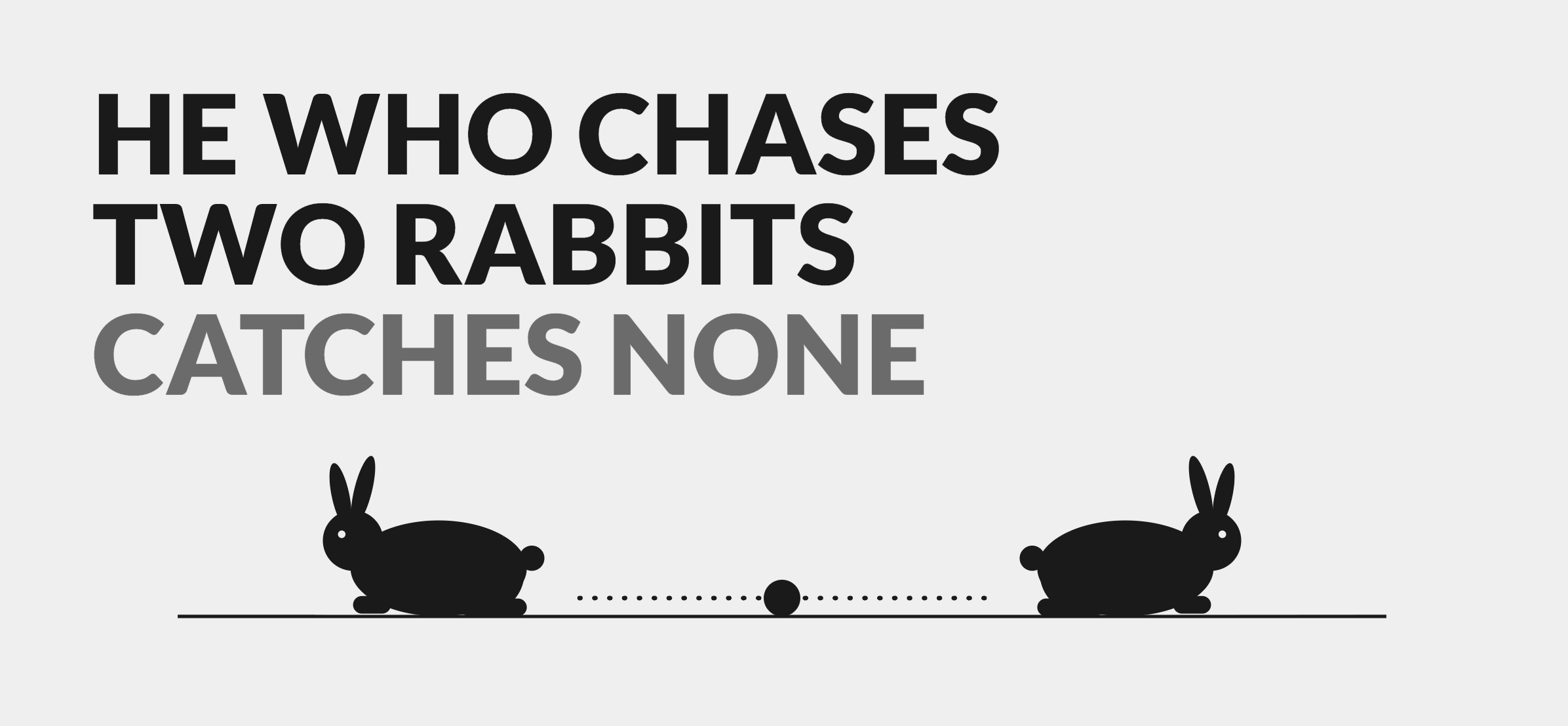
He who chases two rabbits catches none.
If two pursuits compete, only one is the great one. Find it, and decline or delegate the other.
The cost is hard to see in the short term.
Choosing takes quiet, and most leaders have none.
Ask them what single thing they should start doing to advance their most important goal and many cannot say. The noise drowns the answer.
Those who can answer then face the next problem: where to begin.
ITERATIONS, NOT HABITS
Our answer is a model of iteration.
Begin with one push-up!!!
It takes ten seconds and needs no motivation, so it is too small to refuse. Then add repetitions, then weight, then refine the technique, adjusting at each stage to what the environment shows.
A habit repeats an act; an iteration improves it.
Each improvement builds on the last, and the gains compound. Within a year the practice has changed in kind, not only in degree.
Take a leader who wants better feedback in the team. In week one, one candid conversation. In week two, two, with a clearer request. In week three, a standing weekly rhythm. Each step responds to what the last one revealed, and no new system is needed.
Iteration also removes the penalty for a missed day. A broken habit feels like failure. A missed iteration is information: the leader adjusts and continues.
WHERE TO START
Spend the first twenty minutes of each day alone, without a screen.
Name the one habit that costs you most.
Name the one practice that would most advance your purpose.
Begin at the smallest scale that counts, then iterate.
⋯⋯⋯⋯⋯⋯⋯⋯⋯⋯
☰ CONSULTING - Book a 40-minute appointment - $660
It’s lonely at the top. If you’re a senior leader seeking a listener to talk through your thoughts, get an external opinion, or simply reset, reach out for a chat.